
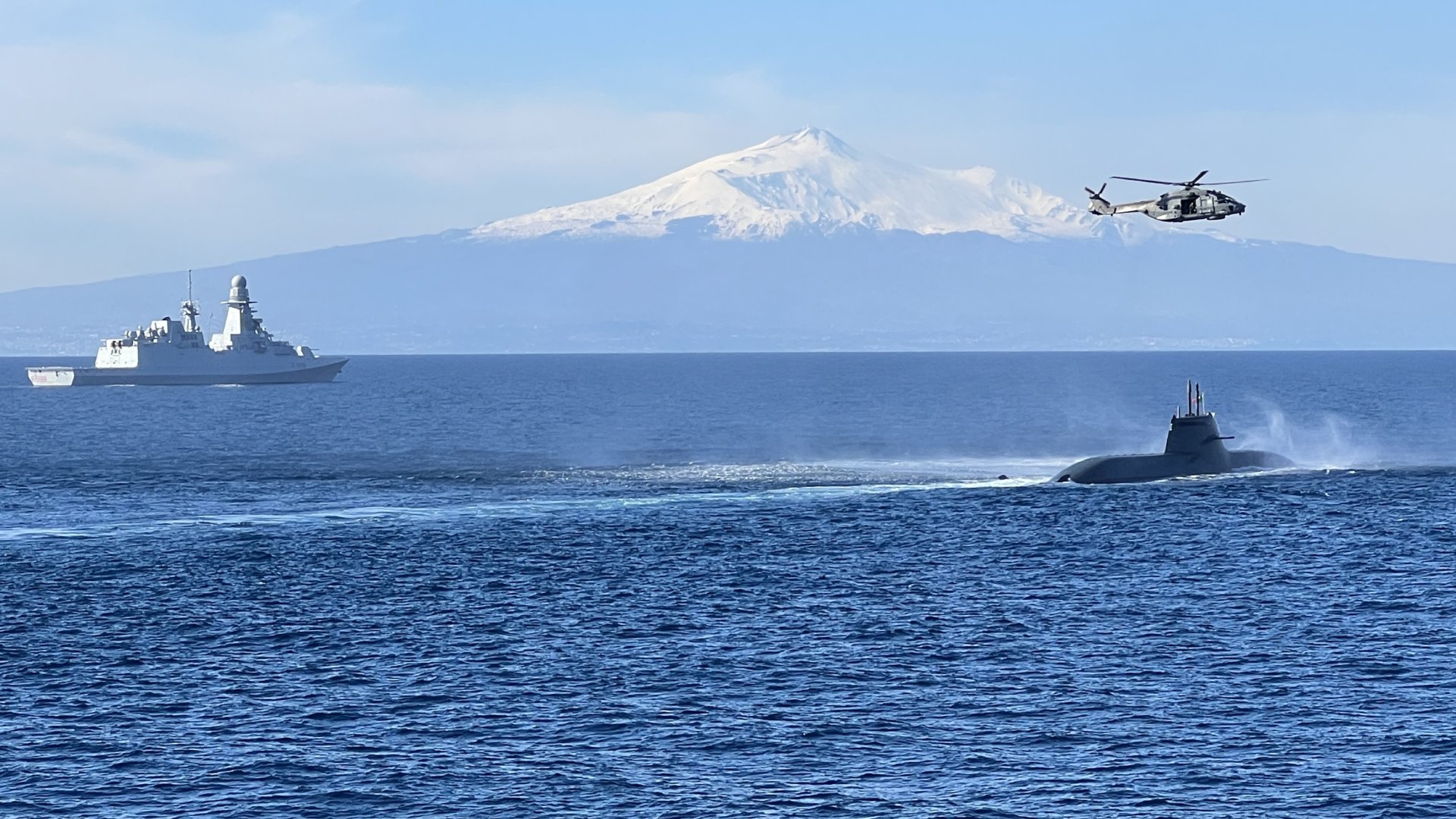
In the Gulf of Catania, the Alliance’s main anti-submarine exercise. Italy protagonist with naval and submarine units
Dynamic Manta 2026, NATO’s main anti-submarine exercise, took place in the heart of the Mediterranean Sea, which from 23 February to 6 March brought together naval, underwater and air forces from numerous allied countries in a complex and highly realistic operational scenario. The activity, which was successfully concluded after two weeks of intense manoeuvres, represented one of the central moments of the Alliance’s maritime training, strengthening the collective capacity to identify, track and counter submarine threats in one of the most strategic areas in the world.
The exercise took place in the central Mediterranean and involved over 1,600 military personnel, seven surface ships, several submarines and 12 aircraft including maritime patrol aircraft and helicopters. Eleven NATO countries participated: Canada, France, Germany, Greece, Italy, the Netherlands, Portugal, Spain, Turkey, the United Kingdom and the United States. The presence of such diversified assets has made it possible to simulate real operations in a “multidomain” context, integrating air, surface and underwater capabilities.
The central objective of Dynamic Manta is to improve interoperability between allied navies and to perfect anti-submarine warfare (ASW) techniques, an increasingly crucial component for maritime security. During the exercise, the participating submarines alternated in the role of “hunters” and escaped units, while ships and aircraft collaborated in their identification and tracking using sonar, advanced sensors and tactical communication systems. This type of training allows the Allied forces to operate with shared procedures and to coordinate effectively in complex operational scenarios.
The Mediterranean represents a particularly challenging environment for this type of activity. The variability of the seabed, the acoustic conditions and the high maritime traffic make it more difficult to locate submarines. Precisely because of these characteristics, the Mediterranean basin is considered an ideal setting for the training of anti-submarine forces, capable of testing technologies, tactics and decision-making skills of crews.
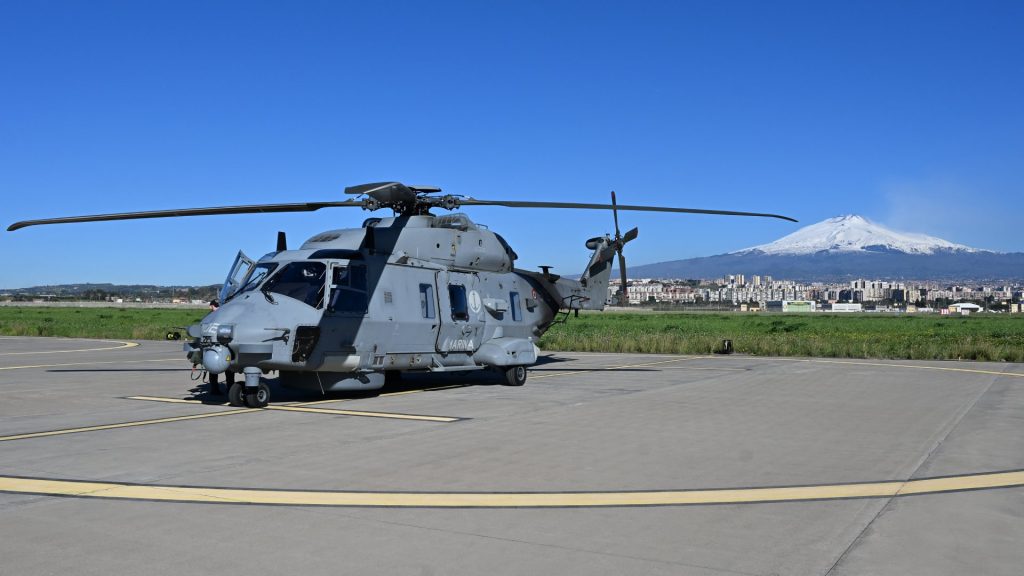
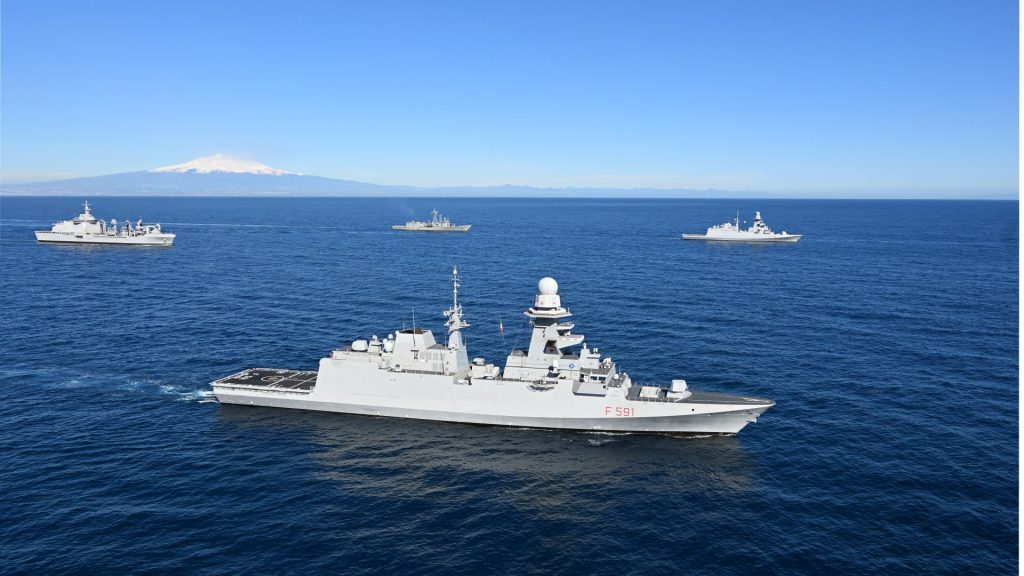
Italy played a leading role in the exercise, thanks to both its geographical position and the operational contribution of the Navy. Among the assets used are the frigates Virginio Fasan and Spartaco Schergat, the supply ship Vulcano and the submarines Pietro Venuti and Romeo Romei: units that represent some of Italy’s most advanced capabilities in the field of underwater warfare.
During the exercise, the frigate Virginio Fasan, under the command of frigate captain Simone Pitto and used as flagship of the Standing NATO Maritime Group Two (SNMG2), played a central role in the coordination of operations, contributing significantly to the full integration between the allied naval units.
A key role in the exercise was in fact played by the Standing NATO Maritime Group Two (SNMG2), one of the Alliance’s permanent naval groups active in the Mediterranean. The group has ensured the command and control of operations and the integration between the different components involved, ensuring coordination between surface units, submarines and multinational air assets.
At the helm of SNMG2 is Italian Rear Admiral Cristian Nardone, who underlined the strategic value of the activity: “Dynamic Manta represents a concrete demonstration of NATO’s unity and determination. Working together in a challenging maritime environment allows us to strengthen mutual trust between Allies and to improve combat capabilities, reaffirming the collective commitment to the defence of the Alliance.”
The exercise was coordinated by NATO Submarine Command (COMSUBNATO) under the supervision of Allied Maritime Command (MARCOM), the structure responsible for planning and conducting the Alliance’s maritime operations. MARCOM represents the strategic reference point for NATO’s naval defence and ensures that Allied forces can operate in an integrated and effective manner.
Among the most important innovations of this edition stands out the integration of an Unmanned Surface Unit (USV). The use of autonomous systems demonstrates NATO’s growing focus on emerging technologies, capable of expanding surveillance and data collection capabilities without directly exposing personnel to operational risks. These innovations are part of a broader strategy to adapt to new maritime security challenges, which include hybrid threats and increasingly sophisticated underwater activities.
According to US Rear Admiral Bret Grabbe, commander of NATO submarines, exercises such as Dynamic Manta are essential to develop an advanced capability to counter underwater threats. Anti-submarine warfare, he recalled, requires the coordinated use of different means – maritime patrol aircraft, ships equipped with sonar and submarines – which must operate as a single team.
In addition to the technical-operational aspect, Dynamic Manta also takes on a clear strategic meaning. The constant presence of allied forces in the Mediterranean represents an element of deterrence and a sign of reassurance for member countries, in an international context characterized by new tensions and emerging risks.
As Rear Admiral Francesco Milazzo, commander of the Italian submarines, pointed out, the underwater dimension is increasingly central to the safety of the sea. Although it is still largely unexplored, it is crucial for all countries bordering the Mediterranean, both for the protection of trade routes and for the protection of underwater infrastructures. With the conclusion of Dynamic Manta 2026, NATO has therefore confirmed the high level of operational readiness of its maritime forces. In the heart of the Mediterranean, the exercise demonstrated how cooperation, technology and joint training remain fundamental elements to ensure the safety of the waters and the stability of a strategic region for the entire Euro-Atlantic system.
Follow us on our Telegram channel