
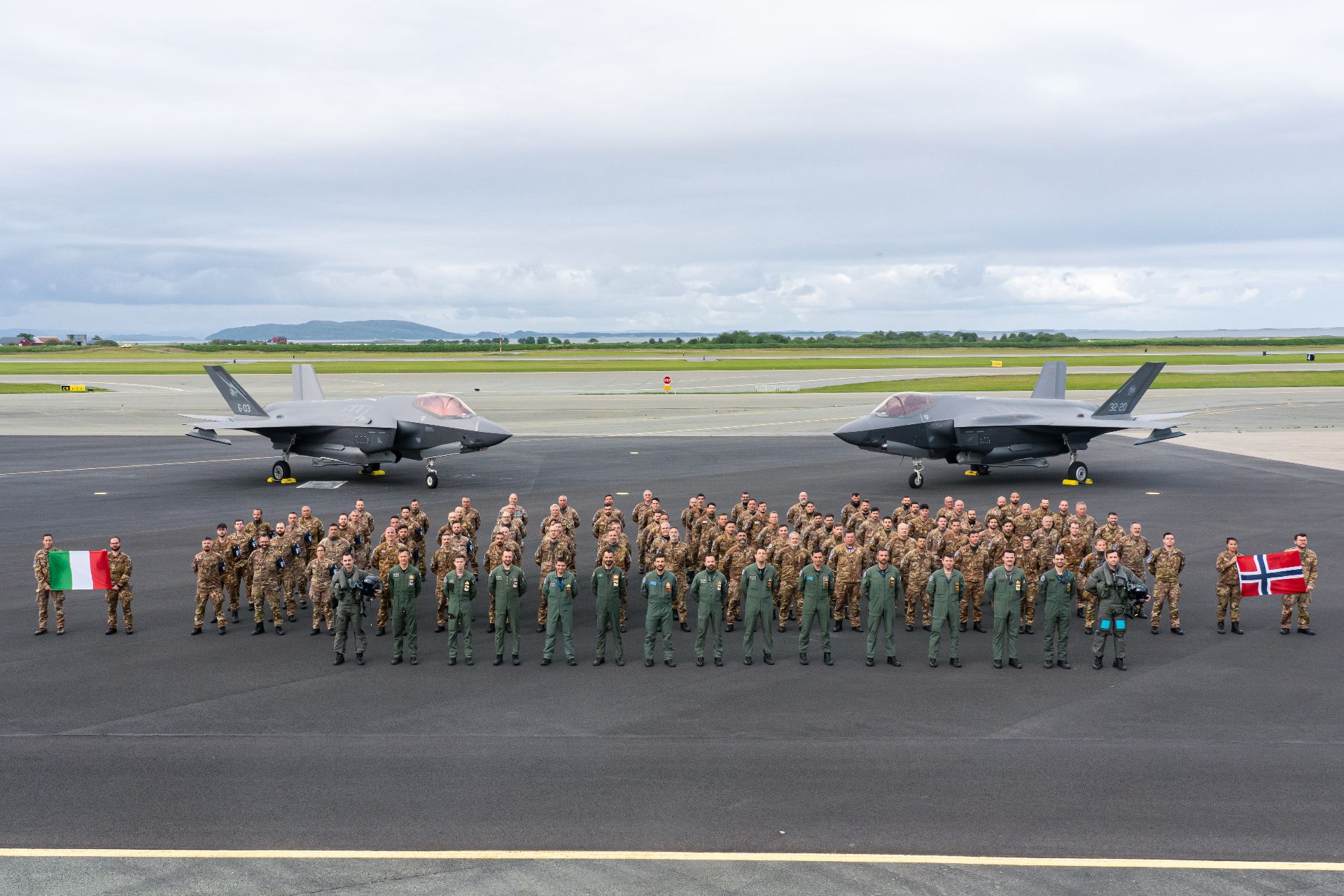
The activity, led by the Allied Air Command of Ramstein, saw personnel and assets from 18 allied countries including Italy operate with Italian Air Force personnel and aircraft.
“Ramstein Flag 2026” (RAFL2026), the large-scale, multi-domain exercise conducted by NATO’s Allied Air Command between 8 and 19 June 2026, has come to an end. The “livex” event saw over 200 aircraft and personnel from 18 allied nations operate in more than 20 host bases, with an average of 150 daily flight sorties in the context of training scenarios of increasing complexity.
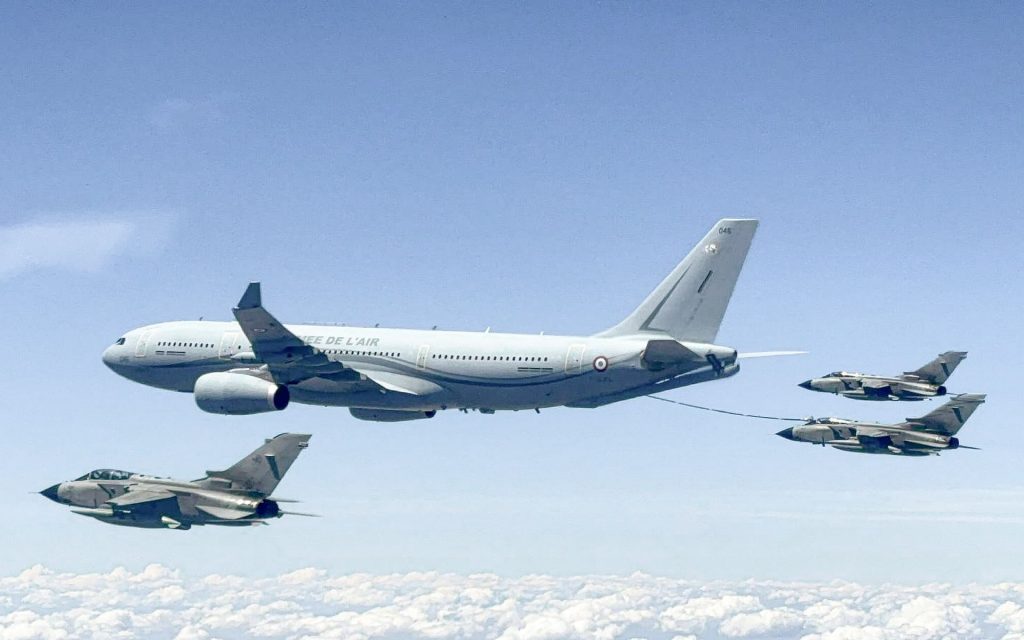
The exercise, hosted mainly by Denmark, Spain, Finland, Norway and Sweden, saw the participation of the Italian Air Force, which through the Italian Air Force Command and 1^ Air Region took care of the operational and training organization of the event, making available a significant package of assets and personnel: F-35 aircraft of the 6th wing of Ghedi and the 32nd wing of Amendola were simultaneously deployed on the Ørland base, in Norway, and Tornado aircraft of the 6th wing of Ghedi on the Albacete air base, in Spain, as regards the quadrant of Southern Europe. The contribution of the Italian Air Force also saw the support of KC-767 aircraft of the 14th Wing of Pratica di Mare, used by the mother base in in-flight refueling (AAR – Air-Air Refuelling) activities and C-130J aircraft of the 46th Air Brigade of Pisa for transport activities in support of the participating departments.
Developed on the “train as we fight” concept, which characterizes the Allied exercises of the “FLAG” series since the first editions starting in the mid-70s, the RAFL2026 had the main objective of perfecting tactics and procedures between the Allied air forces and strengthening and supporting NATO’s defensive commitment to deterrence, collective defense and protection of the Alliance’s territory and airspace. The crews had the opportunity to train in high air and ground threat scenarios, testing procedures to counter area interdiction, integrated air and missile defense. The activities in the Nordic countries have also made it possible to consolidate the readiness of the units with respect to the NATO Agile Combat Employment (ACE) doctrine, focused on the rapid dispersion of forces on austere runways. As part of this type of training activity, last May the Italian Air Force participated in the “Imminent Field 2026” exercise in Finland, deploying F-35B aircraft – the version of the 5^ generation short take-off and vertical landing (STOVL) fighter – which successfully carried out take-offs and landings on motorway sections.
Tactical command and control activities were carried out by a component of the DACCC (Deployable Air Command and Control Centre) of Poggio Renatico, which deployed systems, vehicles and personnel, including a component of the Italian Air Force, in various locations in Sweden and at the newly established CAOC (Combined Air Operation Centre) in Bodø, Norway. The capability, which brought together air defense controllers of allied nations, radio link systems and the Deployable Air Defense Radar (DADR), ensured tactical control of aircraft, airspace surveillance and the dissemination of the Recognized Air Picture (RAP) in support of air operations. In support of communications, NATO has also deployed the 2nd NATO Signal Battalion of Grazzanise at the Swedish base of Kallax. The Chief of Staff of the Italian Air Force, Air Force General Antonio Conserva, as part of a day dedicated to military authorities, met the Italian personnel of the DACCC, led by Gen. D.A. Luca Maineri. On the occasion, the Head of SMA highlighted the Air Force’s commitment to strengthening NATO’s readiness and defensive capabilities, supporting interoperability and collective commitment to deterrence, collective defense and protection of the Alliance’s territory and airspace.
At the end of the exercise, the Commander of the redeployment at the Ørland base, Lieutenant Colonel Giuseppe Petragallo, highlighted the training effectiveness of the exercise and the consolidation of the capabilities of the weapon systems supplied, summarizing in three key concepts – readiness, deterrence and interoperability – the contribution provided by the Italian Air Force and Italy to the NATO Allied Air Command for the success of the entire Ramstein Flag 2026. The projection of personnel, vehicles and air assets required an impressive logistical and organizational effort. Thanks to the synergy with the Norwegian Air Force, as a Host Nation, and the effectiveness of the maintenance department, over 130 flight hours were carried out, guaranteeing an operational readiness of more than 90%. The CIS (Communication and Information System) component, ensured by the 3rd Division of the Logistics Command through the 4th Telecommunications Brigade D.A./A.V. Systems and the Automated Information Systems Department (RESIA), in particular, introduced for the first time in exercise new platforms for the monitoring of strategic networks, within which the systems dedicated to the management of maintenance and the logistics chain of spare parts have also been integrated.
Follow us on our Telegram channel